

Tea, Earl Grey, solid.
A head haunted by lions

Queen Victoria admired him, and he designed a London landmark. He could supposedly draw with both hands at once, and was declared insane a year before dying.
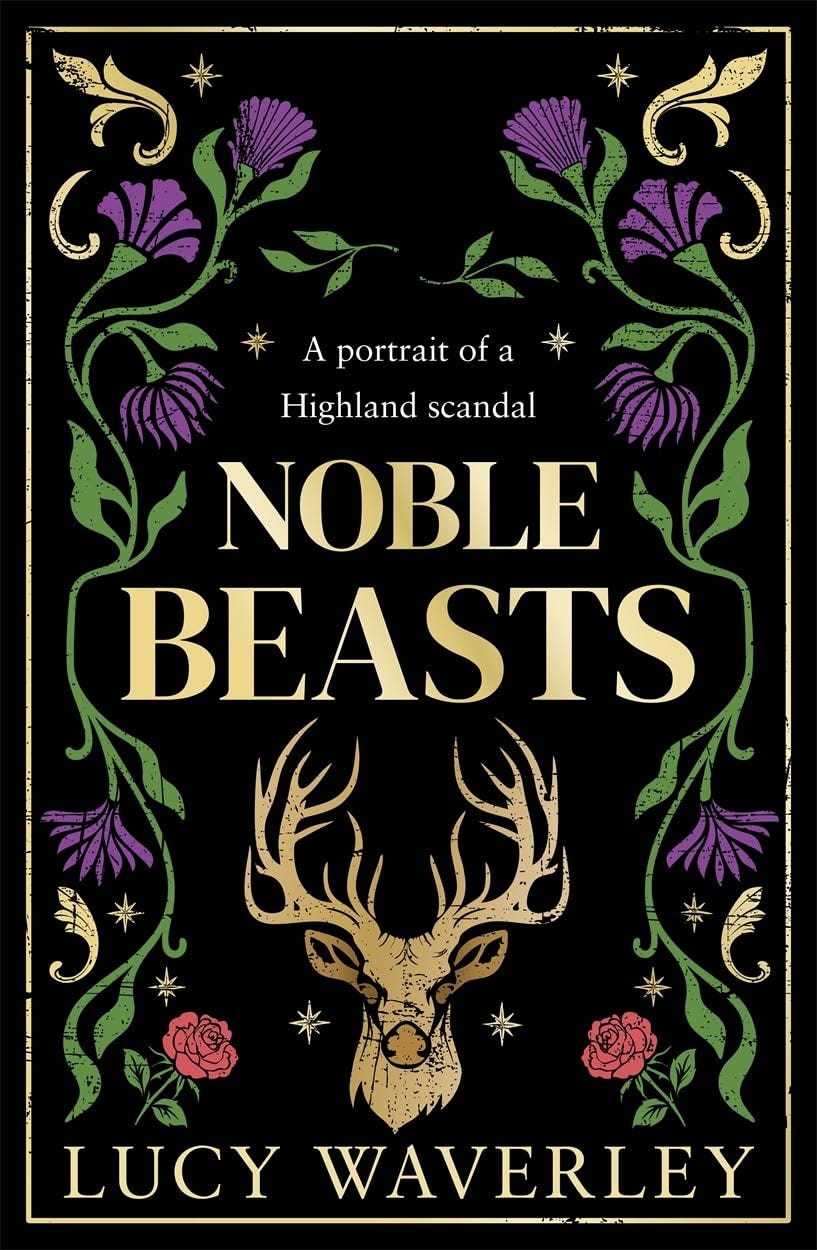
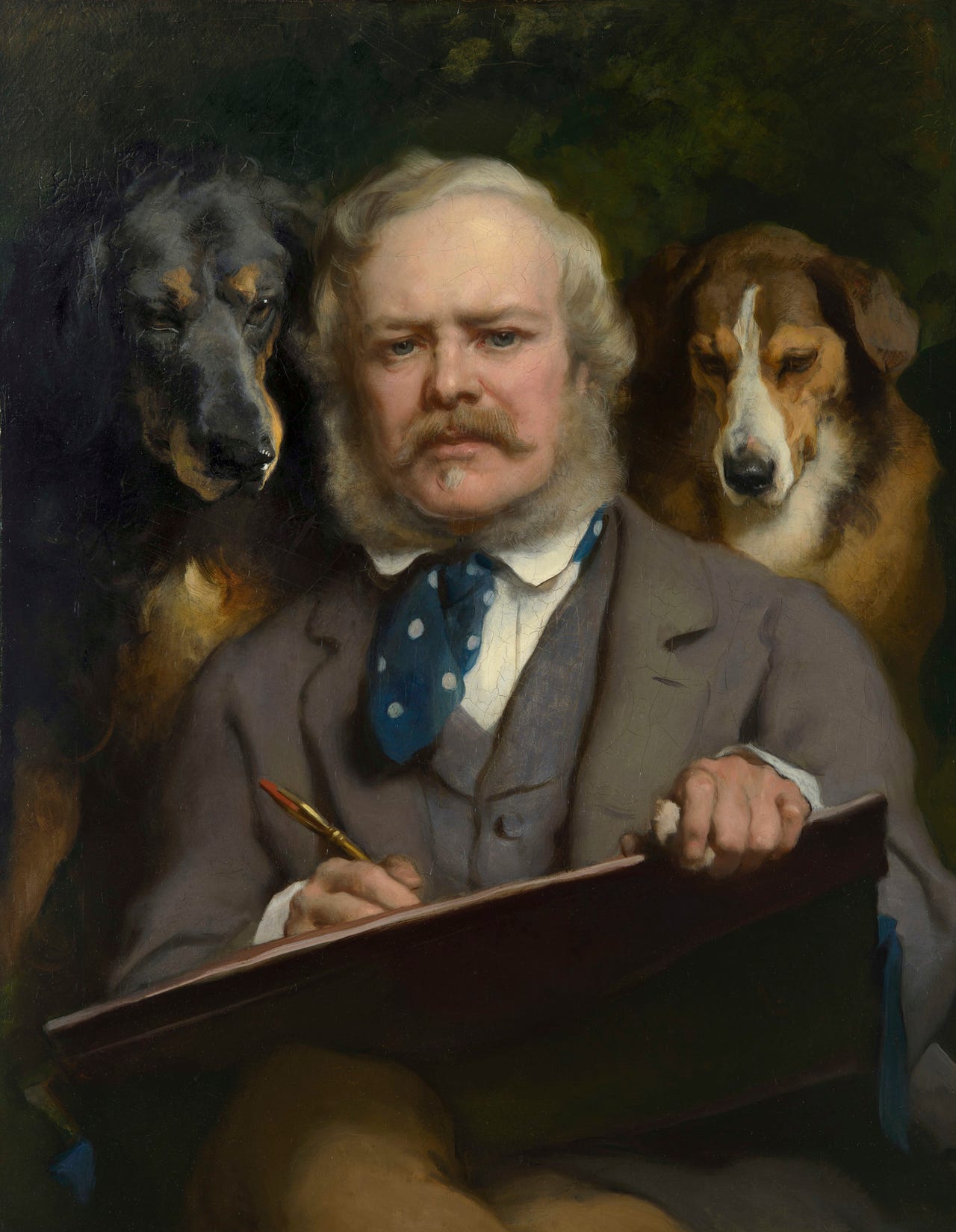
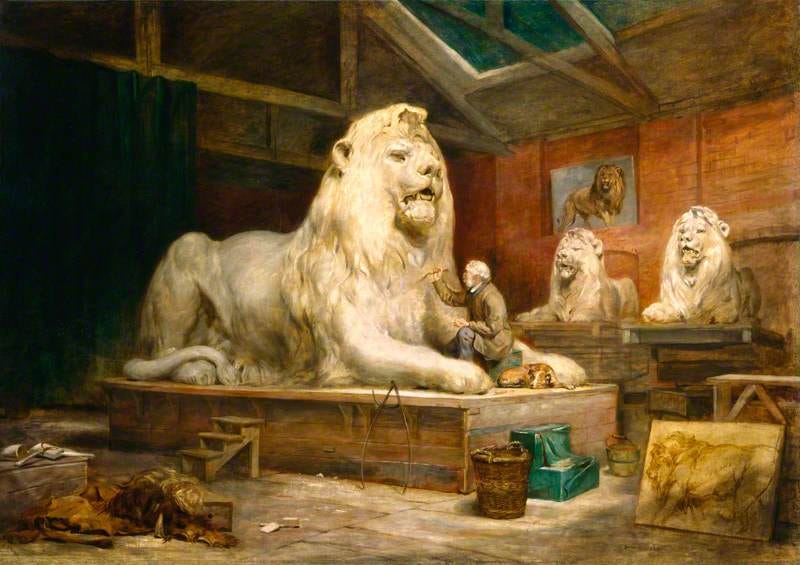
The remarkable life of painter Edwin Landseer—his creation of the lions beneath Nelson’s Column, scandalous love affair, and tragic death—is the subject of Lucy Waverley’s upcoming debut novel NOBLE BEASTS. Waverley is also writing a nonfiction biography of Landseer, and her grasp on the artist’s life allows this story to offer a more incisive take on the stereotype that art and madness are linked.
Once you’ve examined Landseer’s fictionalised life, scroll on down to learn more about his art, and the suitably British recipe it’s paired with. Adapting the flavours of a cup of Earl Grey in the form of a sweet bun drizzled with icing, this teatime treat answers the age-old question, “What if there was a tea I could chew?”.
Sophisticated Quote of the Week
“In painting as in eloquence, the greater your strength, the quieter your manner.” — John Ruskin
Surreal Quote of the Week
“This newsletter is brought to you by the Insect Tyrants of Zeta Reticuli.” — W.S. Luk
Animal kingdom: Lucy Waverley’s NOBLE BEASTS
“The short hairs around the lion’s nostrils ripple as it assesses him, whiskers twitching. What can it smell? Oil paint and alcohol? Tobacco and dogs? Is that all he is now?”
The myth of the mad artist has lingered for too long. The painful lives and deaths of creatives like Vincent van Gogh have been romanticised into the dubious equation of genius with mental illness, using real suffering to sell paintings. Even now, we like the idea that art demands torment: think about all the actors who spend awards season tearfully recounting the toll that method acting has taken on them.
At first glance, Edwin Landseer’s life, plagued by alcoholism and depression and culminating in being declared legally insane, fits this pop-cultural pattern. However, NOBLE BEASTS backs up its fiction with detailed research to convey a biography that goes beyond the pain he endured.
We read about two phases of his career: designing the lions of Nelson’s Column, and flashbacks throughout his long affair with Georgina Russell, Duchess of Bedford. Twenty years his senior and married to his artistic patron, the Duchess nevertheless shares a love of animals and desire for genuine connection that battles constantly against the divides of class. “Dogs aren’t pretending to be something they’re not,” Landseer tells the Duchess, a stark contrast to their world of social ritual.
From the stench of Victorian London to the windblown Scottish Highlands, Waverley evocatively renders her setting, and how Landseer’s paintings show “tragedy and hope bound together in twisting, sinuous animal forms”. We see into his increasingly troubled mind, as a hallucinatory lion stalks him through his studio, taunting him for his failures as he tries to complete his final artworks.
A more simplistic novel would have made the Duke of Bedford a straightforward antagonist to Landseer and the Duchess’ romance, but Waverley allows us to empathise with the Duke and consider the complex fallout of their affair. And like his romance, Landseer’s art is equally intertwined with the forces of society.
From the Royal Academy to the complexities of patronage, Landseer’s artistic expression is constrained by powerful institutions. While the number of characters and intersecting timelines sometimes make this story tricky to follow, Waverley charts how these forces shaped Landseer’s life, adding realistic nuance to how and why he endured addiction and despair. Rather than the stereotypical “mad artist”, whose suffering is often presented as the necessary price of genius, NOBLE BEASTS is a gratifyingly attentive portrait of the complexities connecting personal tragedy and artistic triumph.
NOBLE BEASTS will be published on May 21st by Bonnier
Tooth and claw: the animals of Edwin Landseer
As many characters in NOBLE BEASTS remark, Landseer’s paintings reflect human society in the animals they depict. From gentle satire to eerie critique, his work captures the breadth of cultural trends in his time.
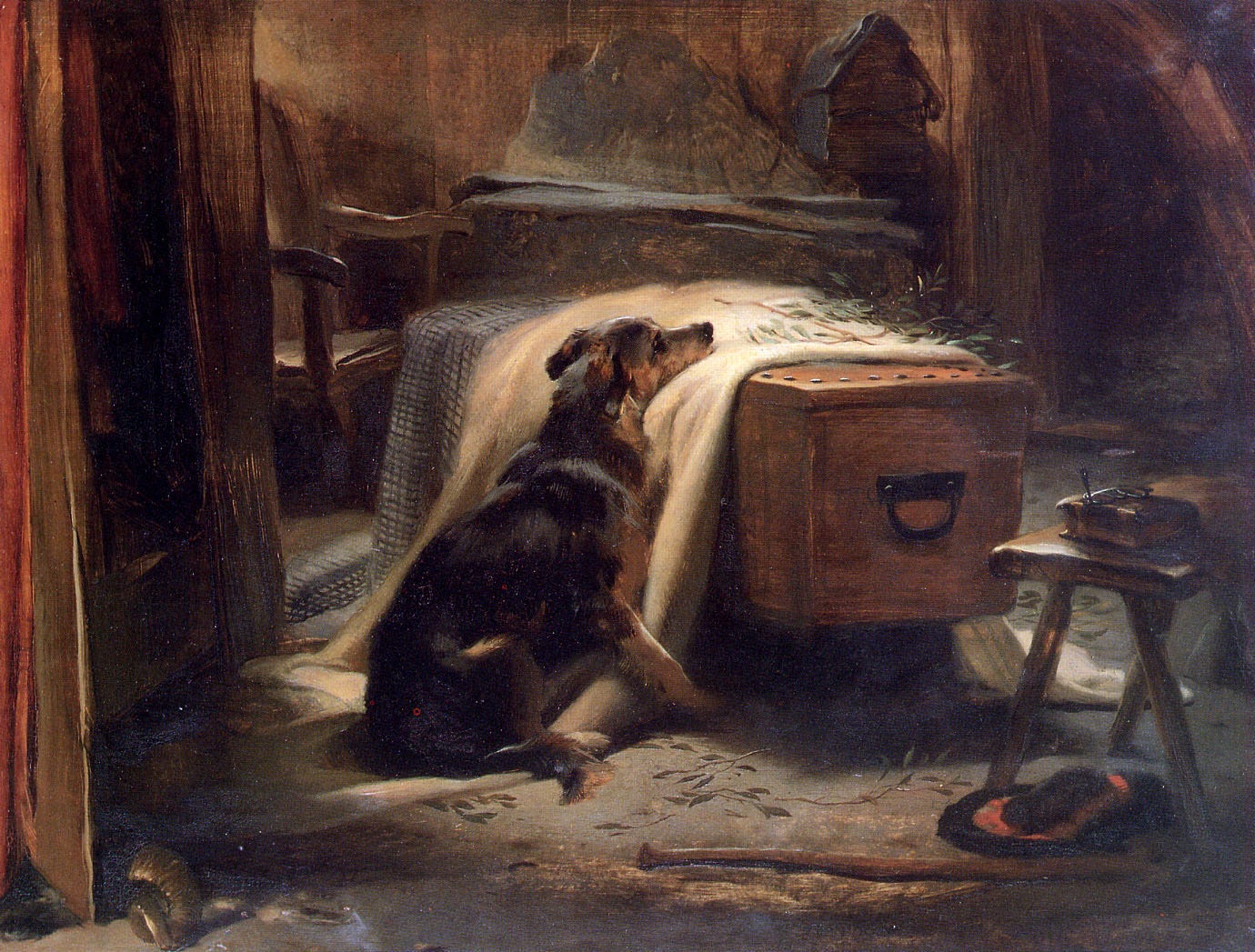
Catering to contemporary sentimental tastes, he painted numerous loyal dogs mourning their dead owners. In The Old Shepherd’s Chief Mourner Landseer elevates the scene with details like the shepherd’s belongings scattered on the floor, and how the light falling on pale fabric illuminates the dog’s head like a halo.
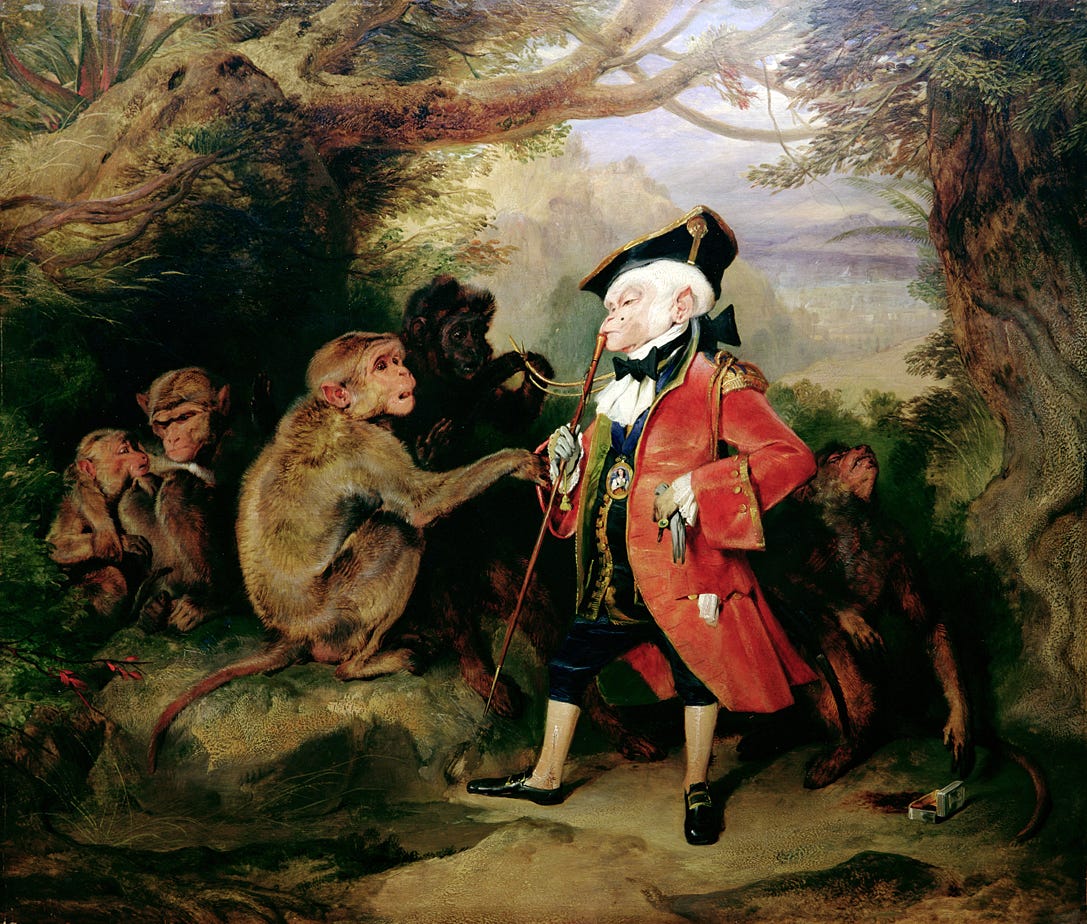
He used animals to satirise the pretensions of human society, as in the foppish primates of The Monkey Who Had Seen The World, and reinterpreted the legend of Alexander the Great’s meeting with the philosopher Diogenes, who only addressed Alexander to demand that he move out of the way of the sun.
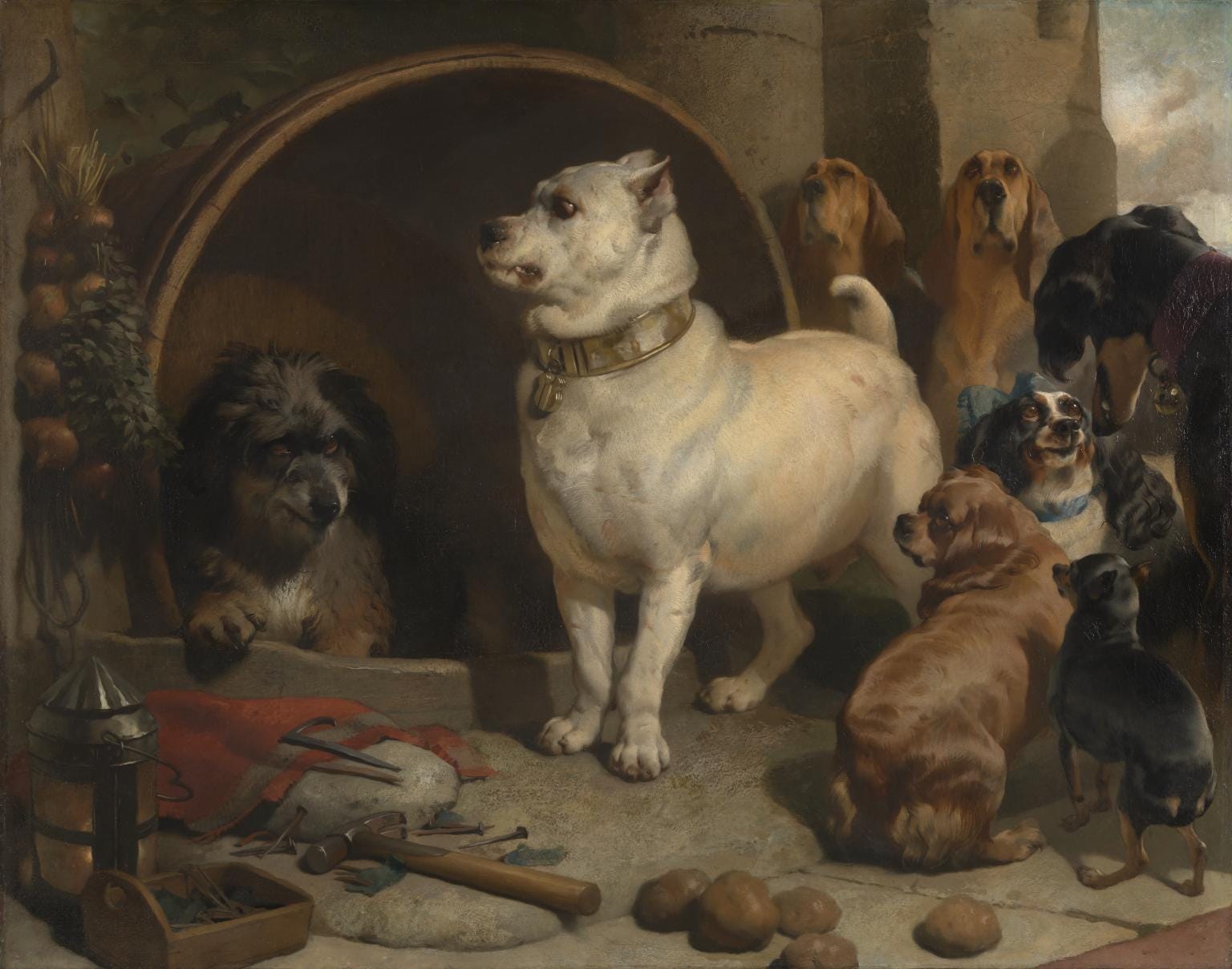
Landseer’s take on the scene is simple but effective in its contrasts: the proud military bulldog representing Alexander flanked by his minions, his white fur drawing our eyes so that we almost miss the scruffy Diogenes, his half of the scene containing only miscellaneous tools.
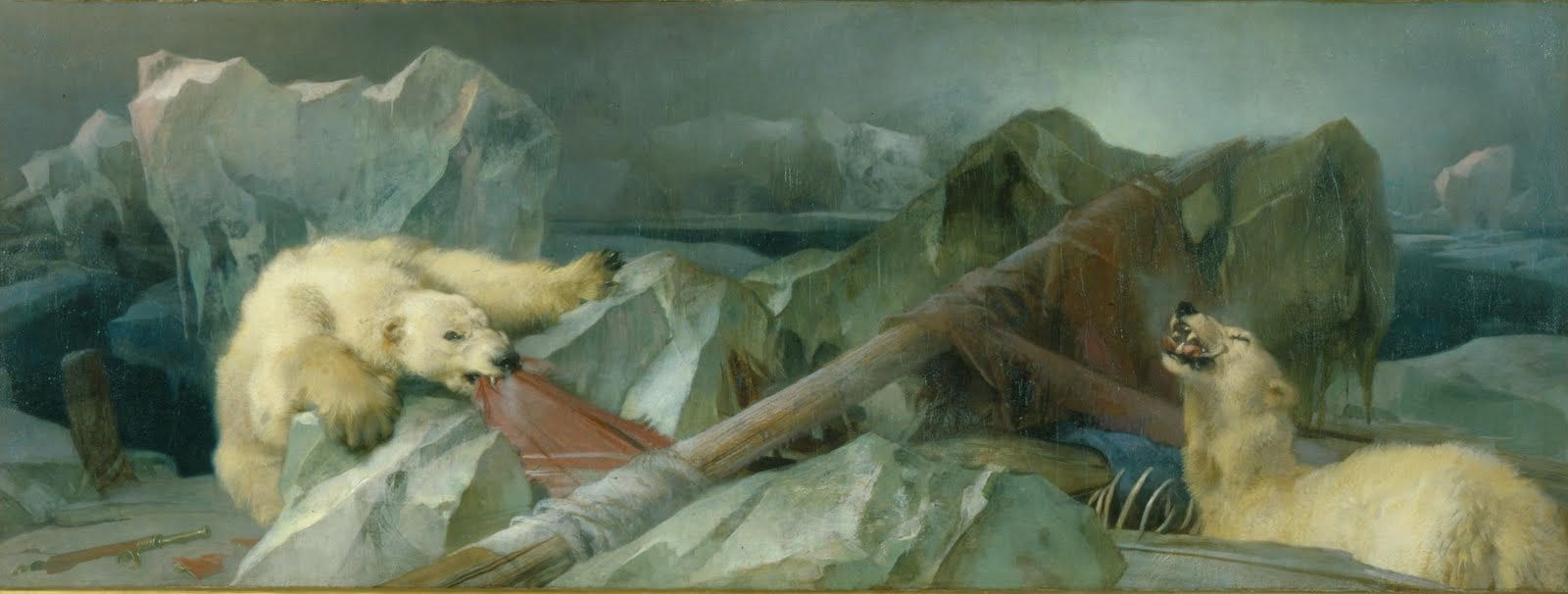
But Landseer’s uncanniest work is his late-career masterpiece Man Proposes, God Disposes, inspired by Sir John Franklin’s disastrous Arctic expedition, where his entire crew perished. Landseer speckles his monochrome landscape with tattered red flags to hint at the expedition’s gory fate, a vision of colonial ambition conquered by nature.
Unsurprisingly, the painting has developed a reputation for being cursed.
Earl Grey milk bread buns
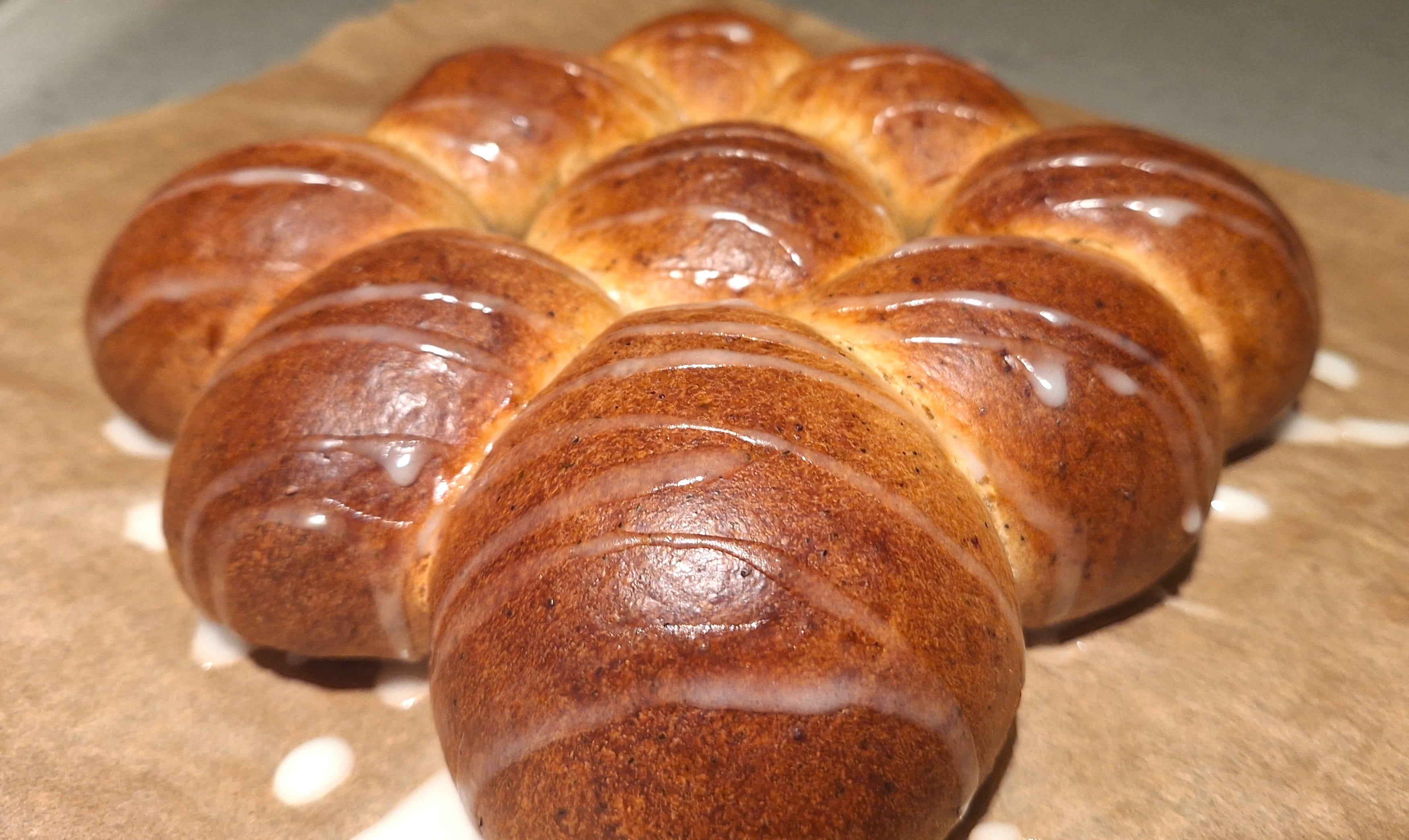
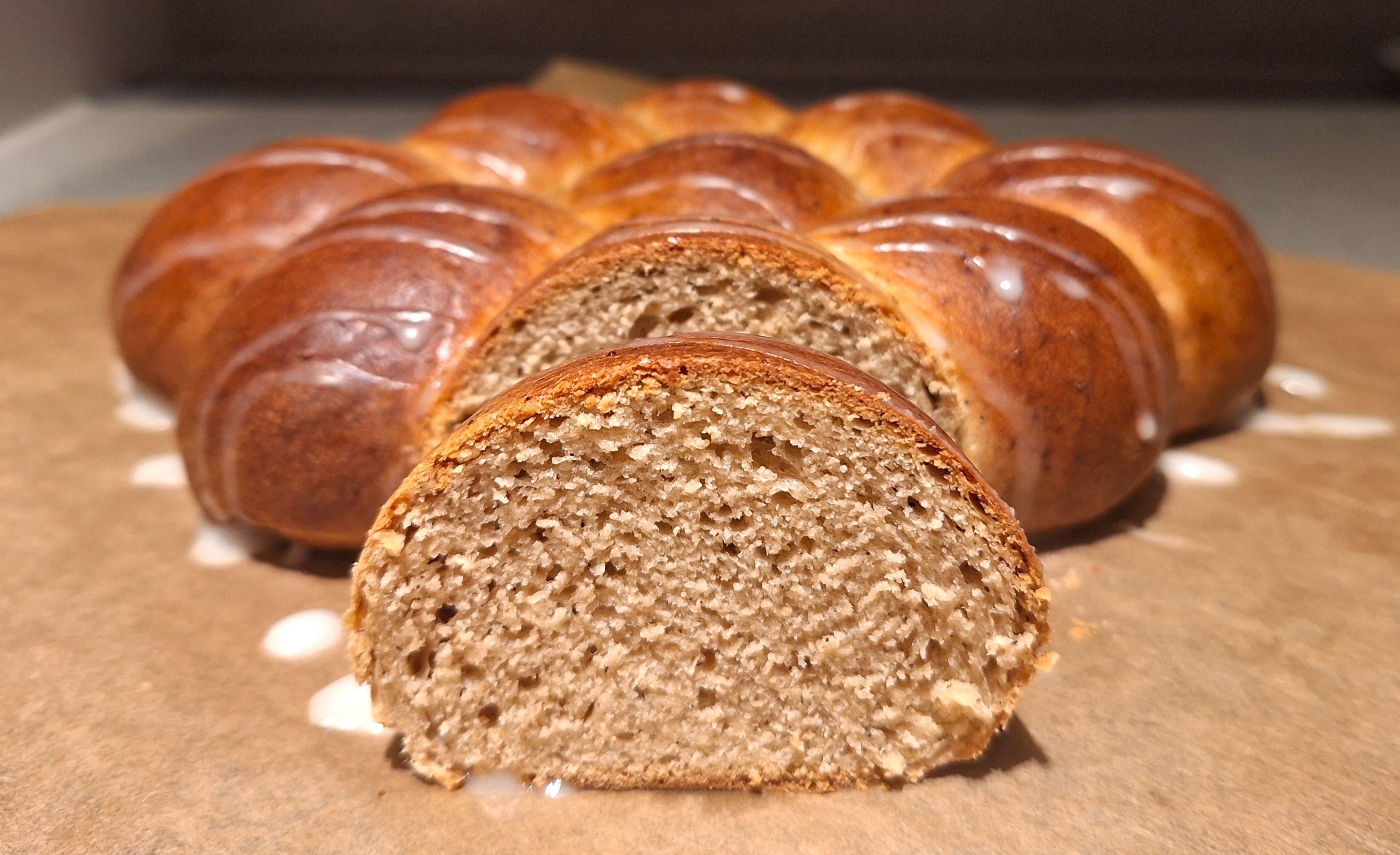
In a hurry? No time for a leisurely afternoon tea? Luckily, I’m here to solve your caffeinated conundrum: this recipe for Earl Grey buns with lemon icing is high tea in a single bite. Packed with the punchy flavours of tea, lemon, and bergamot, these buns will give you the kick of caffeine that gets you through your mid-morning slump.
2-3 Earl Grey tea bags
250ml whole milk
400g bread flour
80g sugar
1 tbsp dried yeast
1 egg
1 tsp salt
80g butter
4-5 tbsp icing sugar
2 tbsp lemon juice
In a large saucepan, combine 2 tea bags with 150ml milk. Simmer, stirring constantly, until the liquid is brown and smells strongly of tea, 3-5 minutes. Remove the tea bags, pressing with a spoon to get all the liquid out, and stir in 50g flour. Cook and stir over medium heat until the mixture is thick. Remove from the heat, put the butter into the saucepan, and leave to cool.
Stir the dried yeast into the remaining milk. Optionally, you can snip open the tea bag and set aside 1 tsp of tea leaves. Combine the milk mixture, tea leaves if using, and all remaining ingredients except the icing sugar and lemon juice, with the flour mixture in the saucepan. Leave for 5 minutes—this will make the dough easier to handle.
Knead the dough for 10 minutes until smooth and tacky. Let it rise in a warm place for 90 minutes. Once risen, divide into 8-10 balls, arrange on a baking tray lined with parchment, and rise again for 50 minutes.
Preheat the oven to 180°C. Brush the buns with a little milk, and bake for 30 minutes. Meanwhile, mix the icing sugar and lemon juice to create a thick icing. Let the buns cool fully, then drizzle or pipe on the icing. Leave to set for 30 minutes before eating.